When customers message, they expect acknowledgement
Most customers don’t expect a complete answer immediately.
They expect to know their message has been seen and will be handled.
If there is silence, they assume:
- the business is unavailable
- the message was missed
- they should contact someone else
The first few minutes often decide whether the conversation continues.
Why instant replies are difficult manually
Businesses try to respond quickly, but real situations interfere:
- staff is helping another customer
- messages arrive outside working hours
- multiple conversations happen at once
- common questions repeat throughout the day
Trying to manually keep up usually results in either delays or rushed replies.

How silence ends conversations
Customers often contact another business.
The misunderstanding about automated replies
Many businesses avoid automation because they think it sends generic messages.
Automation is not about replacing conversation.
It is about starting it properly.
A useful first reply should:
- acknowledge the customer
- understand the request
- collect basic context
- guide the next step
This prepares a human conversation instead of blocking it.
How structured replies actually work
Instead of writing the same responses repeatedly, businesses define a reply structure.
When a message arrives:
- Customer receives acknowledgement
- Basic requirement is identified
- Relevant details are collected
- Staff receives context before replying
The human response becomes clearer and faster.
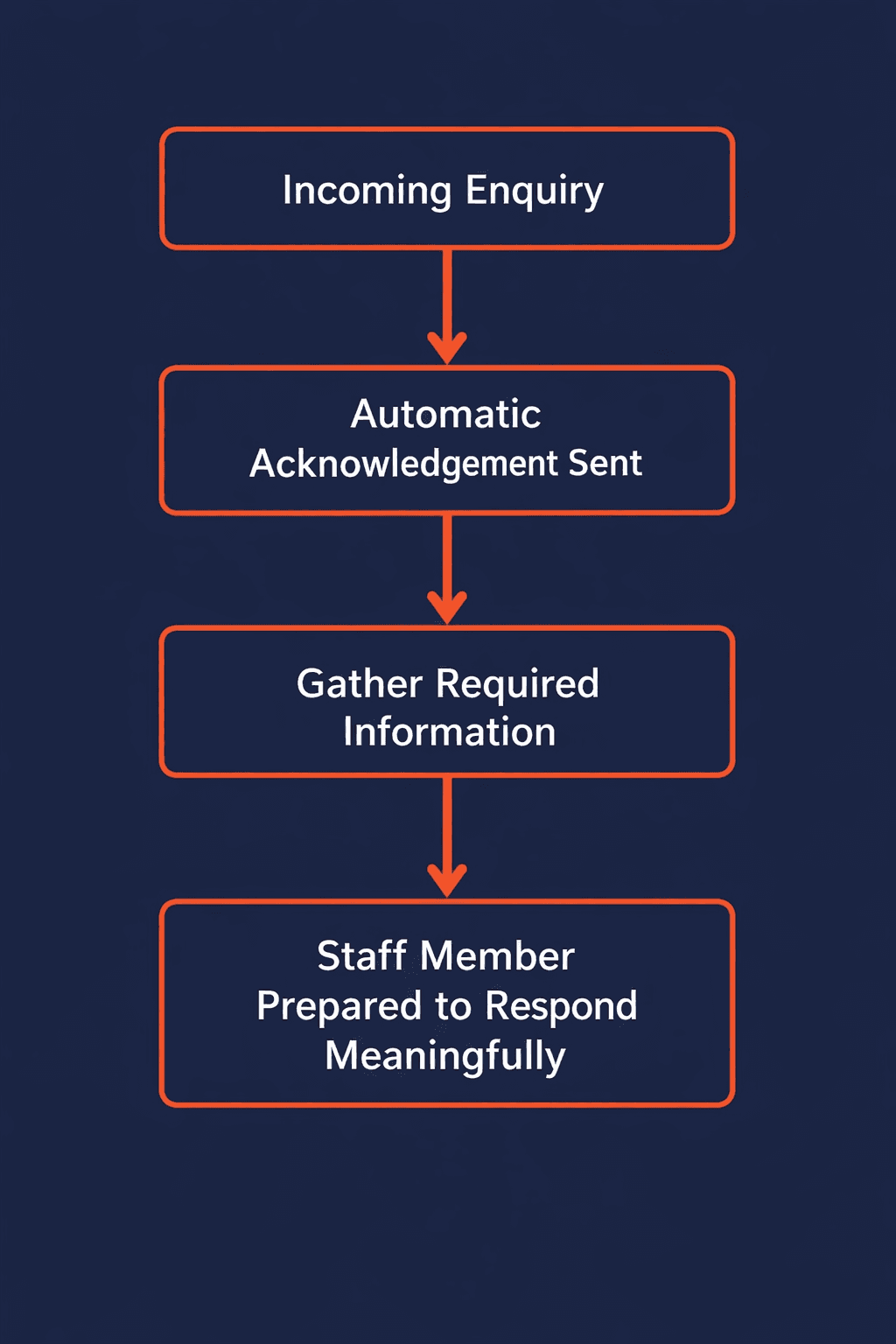
How a structured reply prepares the conversation
Context collection allows staff to respond without repeating basic questions.
What changes after this
The conversation quality improves because:
- customers feel attended to immediately
- staff avoids repetitive questions
- replies stay consistent
- conversations move forward faster
The system begins the interaction, people continue it.
About our approach
Sigmoid AI Solutions designs communication systems that begin conversations instantly and prepare them so staff can focus on understanding and helping instead of starting from scratch each time.
When this may not help
If every customer interaction always requires immediate deep consultation and no repeated questions exist, structured replies may not significantly change the experience.
Quick self-check
You may benefit from structured replies if:
- customers ask similar initial questions
- replies depend on who is available
- messages arrive outside working hours
- conversations repeatedly start with the same details